The Product Development Process

The 3D Innovations Product Development Process Explained

Concept
The conceptual phase typically begins with developing the basic idea and requirements into a visual object that depicts what the final product could look like. This involves integrating industrial design methods that include various materials, surface finish of the parts, and overall aesthetics.

Design/Prototype
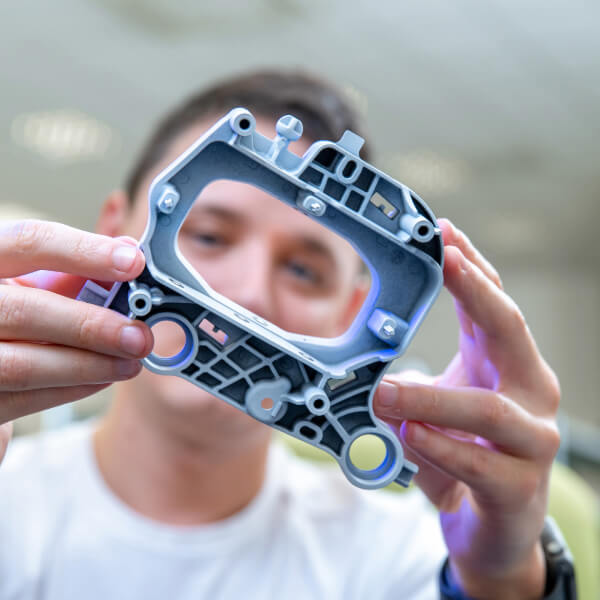
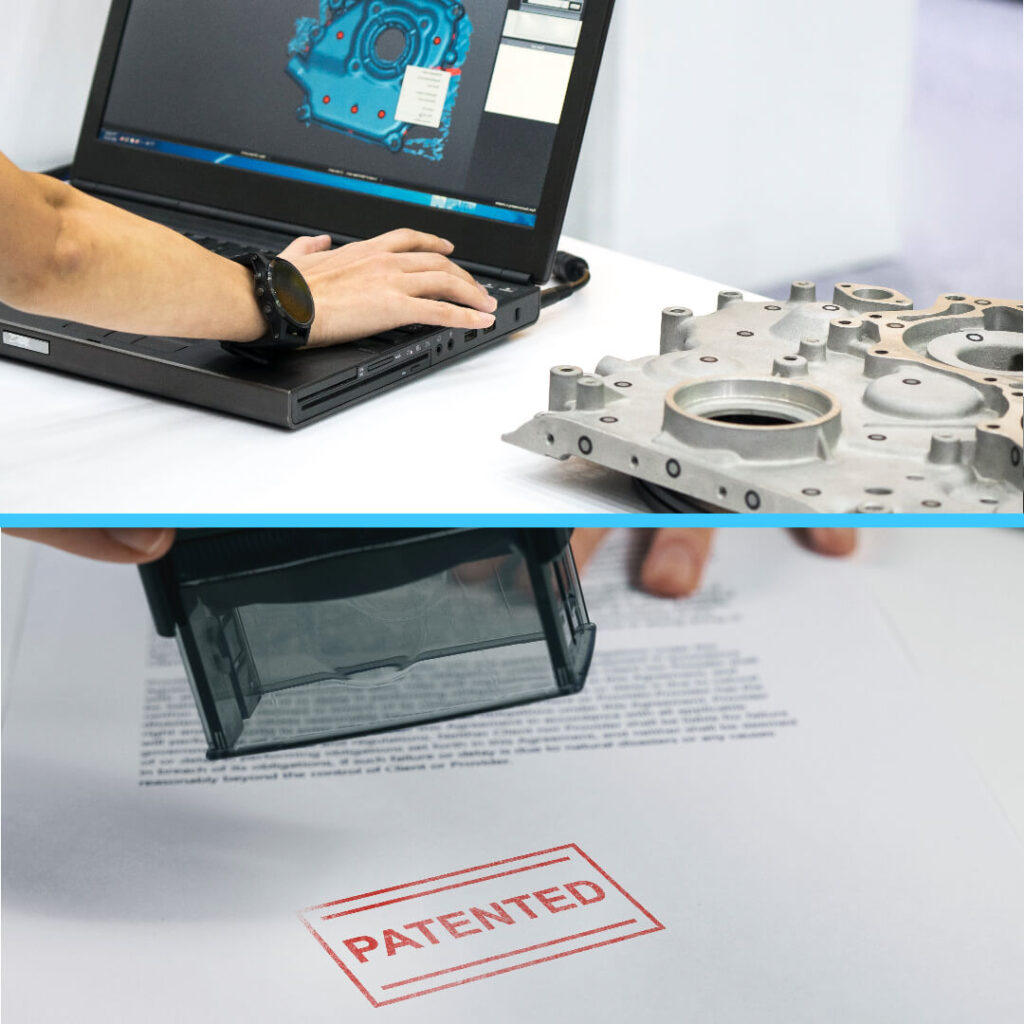
With the requirements fully or partially defined, the conceptual design can be transformed into a virtual design that is not only functional, but manufacturable. Design For Manufacturability (DFM) is a critical part of this design phase. The DFM process will be based on the product type and ultimately, the production manufacturing method(s) that will be used. Once a virtual design is completed using 3D CAD (Computer Aided Design), it must be validated to ensure the proper functionality. Having a tangible item to feel, touch, hold, and test is always recommended and can save on the cost of re-design and re-working of production tooling and molds if errors are not caught before proceeding with the manufacturing phase. With 3D Printing becoming more mainstream and with more materials available for use, this is often times the preferred method for prototyping a design. Other prototyping methods can also be used if required. Prototypes can also be produced to be used as marketing tools to present to investors, potential partners, or for media releases.

Manufacturing
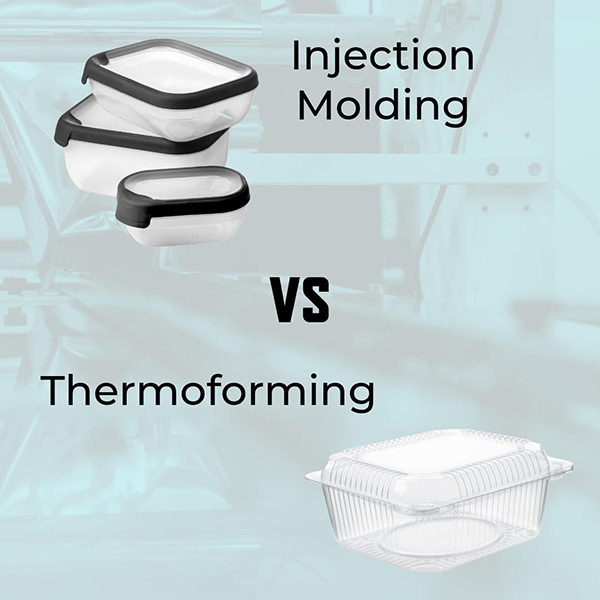
Once the design has been fully validated to ensure that form, fit, and function have been accounted for, the production manufacturing phase can begin. If high volume quantities are required, special molds and tooling are likely needed to efficiently and cost effectively produce final production parts. Low volumes can also be produced using various molding methods, but may not be feasible for quantities less than several hundred parts. Depending on the products functionality, an appropriate manufacturing method will be selected. If the product requires integrating electronics or assembly of other parts, this would be done during the manufacturing phase once all individual components have been produced.

Product
Product packaging and marketing play an important role in getting the product launched and promoted in the marketplace. Specialized packaging can be design and manufactured to fit the product specifications. With a team of Marketing and Graphic Design specialists, promotion/marketing, product packaging, graphic design for collateral and websites can be created to showcase the product capabilities.

________

3D Innovations is a full service 3D Engineering/Design company – from the  3D Design to a fully functional 3D Prototype & Product.

What 3D Printing Means for Small Business

3D printing is wowing entrepreneurs and enthusiasts because of its extreme flexibility. It has applications for almost any industry or field” (Yahoo Small Business).

Small businesses have found that 3D printing has not only helped on a per product basis, but overall it has made them much more competitive in the marketplace. Below are four ways in which 3D printing benefits small business:

  1. Prototyping: You can now have a sketch in the morning of a product idea and by the end of the day, you can hold that product prototype in your hands. Yes this IS possible! 3D printing has simplified and streamlined the prototyping process for businesses. When you are able to modify your product design and prototype in a matter of a week or so, sending the final design to the manufacturer just became that much easier.
  2. Personal Customization: 3D printing allows you to personalize renderings and products for each individual consumer. You are able to use different materials, tweak the product design and add additional customized features so that you provide your customer with exactly what they are envisioning. “Imagine people tweeting or sharing their personally customized version of your product that fits them perfectly. A business could easily market the base design for a product, and tout its customizability to consumers everywhere” (Yahoo Small Business).
  3. Manufacturing: Cutting out the “middle man” on short production runs means that your business will be able to get your product to your consumer much faster and at a lower cost. Also, consider this, in the future a business might also be able to offer their product designs to consumers through a purchasing process so that consumers can download the CAD file and print out their own product at home.
  4. Leveling the Playing Field: 3D printing allows small businesses to take on larger corporations in their field because of the quick product turn around times and increased flexibility. “There are a ton of companies, from one- and two-person organizations to sub-100-person organizations, that actually make themselves competitive with the 10,000-pound gorilla in their particular marketplace because of the advantages they get with 3D printing,” says Bruce Bradshaw, marketing director of Objet” (Entrepreneur). Not all large corporations have been quick to adapt 3D printing technology, and thus they have left themselves vulnerable to smaller and much more flexible businesses that are embracing the technology.

The efficiency of 3D printing has transformed business and will continue to have an ever expanding impact as the technology evolves and becomes more mainstream.

If you are interested in learning more about 3D printing and the advantages it can have on your business, contact us at info@3d-innovations.com and would be more than happy to discuss this with you!

Resources

________

3D Innovations is a full service 3D Engineering/Design company – from the  3D Design to a fully functional 3D Prototype & Product.

The Product Design & Development Process

Many entrepreneurs are often taken back slightly when they are working on their very first product because of the time and effort involved in product design and development. Below is a summary discussing the design and development phases and what exactly goes on behind the scenes to ensure you launch a successful product.

“Product development is the process of creating a new product to be sold by a business or enterprise to its customers.Design refers to those activities involved in creating the styling, look and feel of the product, deciding on the product’s mechanical architecture, selecting materials and processes, and engineering the various components necessary to make the product work. Development refers collectively to the entire process of identifying a market opportunity, creating a product to appeal to the identified market, and finally, testing, modifying and refining the product until it is ready for production.”

The task of developing a new product is challenging, time-consuming and can be costly. “Great products are not simply designed, but instead they evolve over time through countless hours of research, analysis, design studies, engineering and prototyping efforts, and finally, testing, modifying, and re-testing until the design has been perfected.”

A good new product is the result a methodical development effort with well defined product specifications and project goals. The first stage of product development is concept development. “During this stage, the needs of the target market are identified, competitive products are reviewed, product specifications are defined, a product concept is selected, an economic analysis is done, and the development project is outlined. This stage provides the foundation for the development effort, and if poorly done can undermine the entire effort.”

Once the concept development stage has been completed, you then move on the the system-level design of the product. “System-level design, or the task of designing the architecture of the product, is the subject of this stage. In prior stages, the team was focused on the core product idea, and the prospective design was largely based on overviews rather than in-depth design and engineering. Designers and engineers develop the product architecture in detail, and manufacturing determines which components should be made and which should be purchased, and identifies the necessary suppliers.”

Once the architecture of the product has been established you move into the design detail phase. “Detail design, or design-for-manufacture, is the stage wherein the necessary engineering is done for every component of the product. During this phase, each part is identified and engineered. Tolerances, materials, and finishes are defined, and the design is documented with drawings or computer files. Increasingly, manufacturers and developers are turning to three-dimensional solid modeling using programs such as Pro-Engineer. Three-dimensional computer models form the core of today’s rapid prototyping and rapid manufacturing technologies. Once the database has been developed, prototype components can be rapidly built on computerized machines such as CNC mills, fused deposition modeling devices, or stereo lithography systems.”

When your design details are complete your product is then ready for testing and refinement. During this phase a number of prototypes are built and refined. These prototypes are necessary to determine whether the performance of the product matches the established specifications. “Models and prototypes are necessary because of the limitations of theoretical work and artificial mediums. A product can be designed and put into simulated use on computer, but one doesn’t really know how it will work until the item is built and tested in its intended environment. Prototyping and modeling efforts begin virtually at the inception of the project and continue into production.”

Once your models have been perfected your product is then ready for production! During this time your product is slowly  being assemble. The production is comparably slower because it provides time to work out any final issues with supplier components, fabrication and assembly procedures. Once things get going though, production will ramp-up and you will begin to see the fruit of your labor!

*If you have any question about product design & development, you can contact us at info@3d-innovations.com

Research:

________

3D Innovations is a full service 3D Engineering/Design company – from the  3D Design to a fully functional 3D Prototype & Product.

Popular 3D Printing & STEM Education News (March 11th – March 15th)

Your weekly 3D printing and STEM education news roundup has arrived!

This week there were plenty of articles about 3D printing announcements at SXSW (South by Southwest) — we included a couple popular ones below for you. We also noticed a trend in 3D printing articles related to business; how it affects business, how small businesses benefit from it and how 3D printing will transform business. We pose this question to you, How has 3D printing affected your business or how do you anticipate it affecting it in the future?

On the STEM front, we would like to give a big Congratulations to the All-Star STEM students that got to meet the president this past week; these high school students are an inspiration!

3D Printing News

STEM Education News

________

3D Innovations is a full service 3D Engineering/Design company – from the  3D Design to a fully functional 3D Prototype & Product.

Popular 3D Printing & STEM Education News (March 4th – March 8th)

Today marks the beginning of South by Southwest (SXSW) and we just know that there is going to be a lot of chatter about 3D printing during and after the event. We are already seeing headlines about new 3D printing products popping up and this is only Day 1. We will be sure to share the most popular news and advancements with you here on our blog. In the meantime, this week we saw the application of 3D printing put to a number of different uses and it just shows how the technology has the potential to influence many different sectors. As for STEM, this week we came across a great article talking about a partnership between Finland and the United States…this kind of cooperation and joint efforts is refreshing and hopefully more countries will adopt this notion and work together to advance STEM.

As always, if there is a news article that you would like to share please leave it in the comments section of this blog. Thanks!

3D Printing News

STEM Education News

________

3D Innovations is a full service 3D Engineering/Design company – from the  3D Design to a fully functional 3D Prototype & Product.

Popular 3D Printing & STEM Education News (February 18th – February 22nd)

Hard to believe that February is already coming to a close. In the STEM education world, this week marked National Engineers Week and we were very happy to see all of the excitement around engineering! As for 3D printing, there are a couple 3D printing conferences & expos coming within the next few months and the buzz around them is sure to grow as the dates get closer.

As always, if there is news that you would like to share please add it to the comments section of this blog post. Thanks!

3D Printing News:

STEM Education News:

New Design Project: “Bugle2″ – A DIY Phono Preamp

In our line of business we have the opportunity to meet fantastic entrepreneurs and business owners and often we become fully immersed in the projects we work on with them; The Bugle2 is one of these projects. “The Bugle2 is a second generation DIY kit phono preamplifier for vinyl playback.” This project is currently on Kickstarter and is working towards their funding goal. If you are a music lover, you have to check out the Bugle2!

What is it? The Bugle2 is a DIY kit for those of you who know how to solder and build electronic projects. It plugs in-between your turntable and audio system (linestage or integrated amplifier) providing the requisite gain and equalization for vinyl playback. It can be built with gains of either 40dB or 60dB, accommodating both moving magnet or moving coil cartridges. The second generation circuit design is an improvement to my popular Bugle phonograph preamplifier.

Who needs it? Anyone who plays vinyl LP records and wants better sound. I also highly recommend a decent turntable to pair with it (such as the U-Turn). You will be amazed at how good vinyl can sound.

Why Kickstarter? The cost of getting custom cases is high. I have calculated break-even costs to be 113 kits, without postage. After adding postage and about $10 margin per kit I came up with the $16,000 minimum pledge value to fund this project. You get a great product and I am safely launched into the marketplace.

Learn more on Kickstarter

How 3D CAD Can Benefit Your Next Project

Often times entrepreneurs find 3D CAD to be extremely interesting and “cool” but do not actually grasp the immense benefits of the technology in relation to product development, prototyping and manufacturing.

Below are some of the major benefits to utilizing 3D CAD for your next project:

  1. Concurrent engineering (CE) - Engineering and manufacturing process are enabled simultaneously from shared 3D CAD data.
  2. Higher quality - Due to increased efficiency resulting from the ability to explore a greater number of design iterations during product development.
  3. Lower unit costs - Due to reduced development and prototype expenses.
  4. Rapid prototyping (RP) - 3D CAD models can be used to produce prototypes from  RP technologies.
  5. Identify inefficiencies - 3D CAD develops opportunities for the elimination of inherent inefficiencies in a design.
  6. Increased accuracy of MRP data - 3D CAD data files can be easily linked and managed by MRP software.
  7. Increased design flexibility & customization - 3D CAD offers a more robust set of tools and methods to modify designs.
  8. Increased design data integrity - With a single 3D CAD model supporting all downstream processes, changes are reflected quickly and accurately.

During the planning stages of your next project, consider using 3D CAD technology to streamline your product development and manufacturing life cycles.

________

3D Innovations is a full service 3D Engineering/Design company – from the 3D Design to a fully functional 3D Prototype & Product.


Popular 3D Printing & STEM Education News (January 21st – January 25th)

Another week has flown by and we are about to close out the month of January…wow! As you scan the weekly 3D printing and STEM education news roundup, you are going to notice that the news articles are from all over the world (UK, China, Russia…). It is amazing to see how a technology can really span the world and pique the interests of many.

3D Printing News:

STEM Education News:

Meet Our CEO: Collin Kobayashi, 3D Designer/Engineer

NAME: Collin Kobayashi
EDUCATION: Master’s of Business Administration (MBA), B.S. in Manufacturing Design

3D designers like Collin Kobayashi are engineering the future through innovative product development using 3D technology.


What is your job?
In addition to managing and operating 3D Innovations as President and Principle Consultant, I work to turn 2D sketches into a 3D object through the use of a software program called CAD. CAD stands for Computer-aided Design and is the first step in starting the product development cycle. Most products that are made today are designed through the use of CAD, from your iPhone or iPad to tables and chairs.

I also work in an educational capacity to provide 3D CAD and pre-engineering training for middle, high school, and post- secondary education students with the 3D Academy, a division of 3D Innovations.

Why did you choose this career?
CAD came out in the late 1980′s as a 2D system. My interest in product design started as I was finishing high school in the mid 1990′s. At that time the market was changing from 2D to 3D and once I learned what 3D is all about I was hooked. From there I wanted to be involved with the design and manufacturing processes to learn about different industries and how systems are designed to fit with today’s technology. I was also interested to see the various engineering aspects of technology products.

Once I was established in the field I became interested in helping students learn about 3D engineering. 3D Academy was started as an extension of 3D Innovations, taking the engineering/design and manufacturing processes and integrating it with Science, Technology, Engineering, and Math (STEM) programs that enable students to learn important core academic skills. STEM education has been supported for many years now to provide students with industry and real life skills. My motivation for starting 3D Academy was to provide students with these valuable opportunities that were not available to me during my high school education and to prepare them for a competitive technological career.

Explain what an average day at work is like for you.
When we begin a project for a client, one of the most common things that we get from them is some sort of idea or input that could be in the form of a picture, sketch or in some cases a detailed drawing. Customers come to us because they need to have their idea taken from their 2D format and turned into a 3D model. Once we get the idea plugged into the CAD program we then refine it based on customer needs. Sometimes the clients need the object to look a certain way or function in a certain way and we ensure those aspects are integrated into the 3D model.

Can you talk a little bit about 3D printing?
One of the methods we use to validate a completed design is 3D printing. 3D printing has been around for 15 or so years now, but it has really come alive in the past 2 or 3 years through more robust technology. 3D printing builds a product in layers based on a CAD design. If you can imagine taking an everyday water bottle that stands about 8 inches high, through 3D printing technology we are able to print it in many paper-thin layers and evaluate if our design will work. One of the greatest benefits of 3D printing is that it allows us to test and evaluate product designs before they go to market.

Was there a moment when you knew that you wanted to become a 3D engineer? 
Being involved with the advances in the early stages of this industry was exciting and motivated me to continue down this pathway. Being able to see that designing a product or system was within my realm solidified my decision to further develop my knowledge to enter this industry and career path.

What was the biggest challenge you faced in your journey to becoming a 3D engineer?
Most of the technical classes that I took in college were challenging because I was never exposed to the areas that my peers had been exposed to for several years. My personal challenge was trying to keep pace with my peers and apply what I was learning to my educational projects, and eventually my daily career activities. Behind all technical activities lies the entrepreneurial aspect of my business. The main challenges are trying to position the business to provide the best possible service while monitoring any changes in the market that might affect our company business model. Keeping up with technology is always challenging as it changes rapidly and systems quickly become obsolete.

Was there a person who inspired or convinced you to get involved in your field? Who was he/she and how did he/she do it?
Initially, I was not inspired or convinced by anyone to get into the areas of entrepreneurship, engineering/design or manufacturing. Yet, throughout the years of my career, I have met many people and colleagues who have shared their vision of business and technology, which had a profound effect on me. I really believe those experiences positively impacted my decision to remain in the interdisciplinary field that I’m currently in.

To learn even more about Collin Kobayashi check out the STEM Works article about him, or contact him at info@3d-innovations.com.